




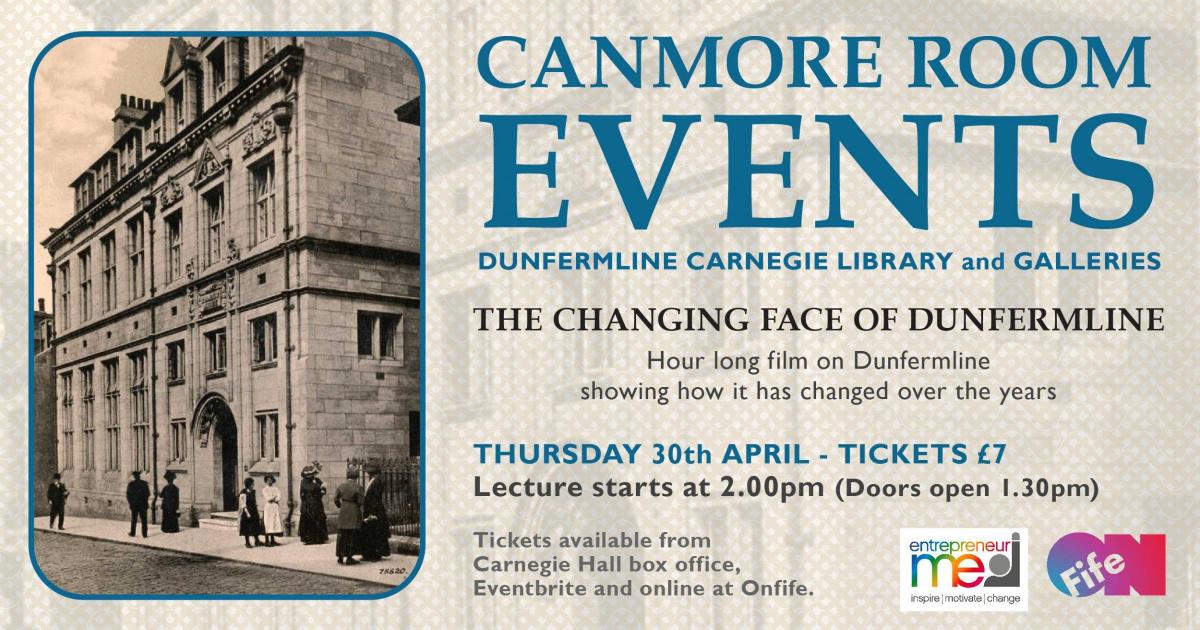

There will be a showing of a film titled ‘The Changing Face of Dunfermline’, created by Dunfermline based filming company ‘Talisman Films Scotland’, in the Canmore Room of Dunfermline Carnegie Library and Galleries at 2.00pm on Thursday April 30.
The photographs in this week’s trip down West Fife’s Memory Lane look at the history of the Kinema Ballroom in Dunfermline. The information and photographs come from the excellent website www.kinemagigz.com created by Dunfermline entertainment historian Colin Gourlay.
The original 'Kinema Ballroom' was Dunfermline's first ever purpose-built dance hall and had its main entrance at 19 Pilmuir Street Dunfermline. Our first photograph shows this entrance which is still there today, though shuttered over. The name Kinema came about because the owners first venture was the nearby picture house in Pilmuir Street called ‘The Palace Kinema’.
A “Grand Opening Carnival Dance” took place on Friday December 23, 1938 and patrons danced the night away to the sounds of 'Ernest Dobbie and his Swingtette Dance Band’ after Provost Hoggan performed the opening ceremony.' Described in its early advertising variously as “The Dancer’s Mecca”, “The Rendezvous Of All Discerning Dancers”, “Fifeshire’s Super Dance Hall” and for five weeks in January & February 1939 as “The Kinema Super Ballroom”, patrons were invited to “Follow The Dancers” and most famously to “Dance And Be Gay The KB Way” long before the more familiar contemporary use of that word today.
'The Kinema Ballroom' was closed on Saturday 30th December 1939 and re-opened on Wednesday July 30, 1941. During this time it was used to billet soldiers from some Scottish regiments while some Polish soldiers were billeted at the Carnegie Women's Institute on the opposite side of Pilmuir Street.
The then Manager Mr George Hylands was quite concerned about the soldiers stomping around on the new sprung floor that had been installed and had it protected by a linoleum floor covering during the period it was used by the soldiers. By the early sixties it became clear that a much larger facility was required, so in 1964 its capacity was quadrupled to more than 1000 with the building of a large extension to the north, including a two-storey frontage on Carnegie Street (now Carnegie Drive).

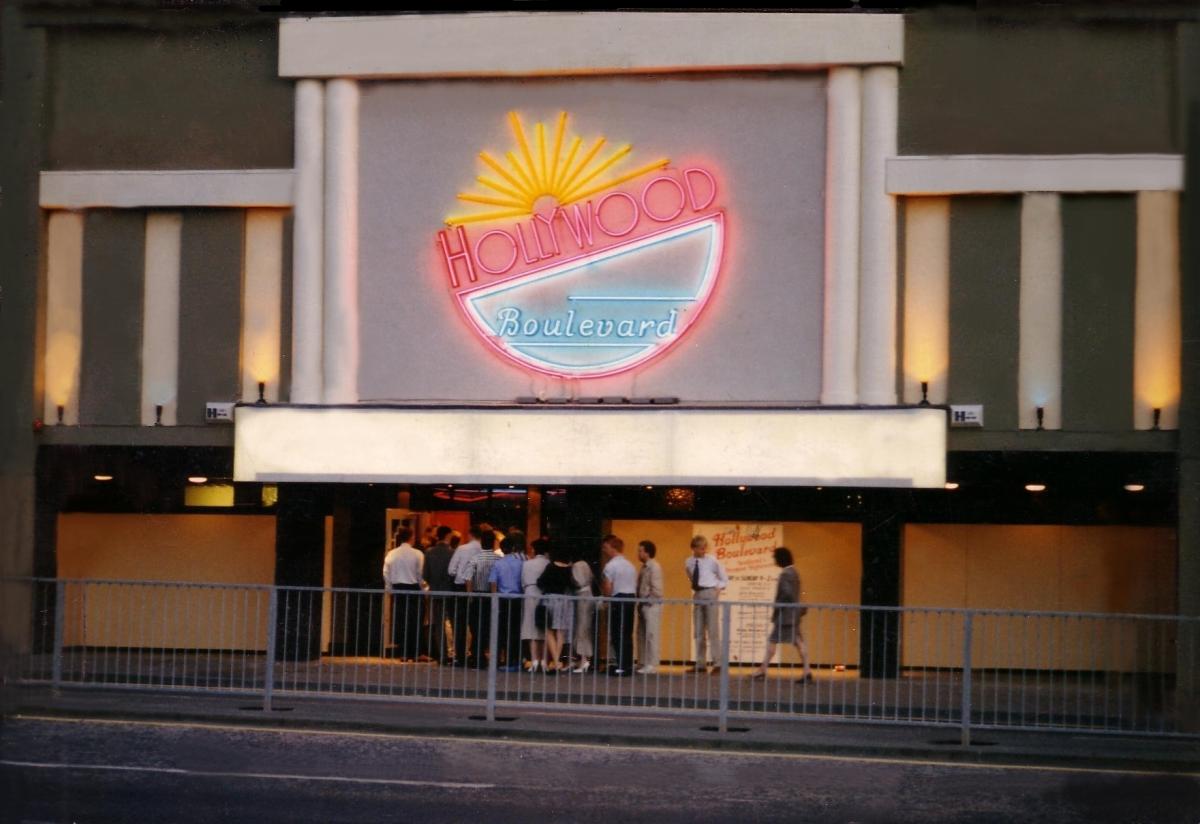
It soon became one of Scotland's most important live music venues. In 1980 it became one of the most innovative and award-winning discotheques in Europe as 'Night Magic' and then in 1988 it was remodelled as ‘Hollywood Boulevard’ as seen in our next image.
In 2007 the name changed again to ‘Velocity’ and the frontage can be seen in our final photograph.

A huge number of artists and bands performed in the Ballroom over the years including ‘The Average White Band’, ‘Kenny Ball and his Jazzmen’, ‘The Bay City Rollers’, local groups ‘Nazareth’, ‘Big Country’ and ‘The Skids’, David Bowie, Boy George, ‘The Clash’, Billy Connolly, Elvis Costello, ‘The Kinks’, ‘The Moody Blues’, Cliff Richard and Sandie Shaw.

Tickets for the film ‘The Changing Face of Dunfermline’ are available from the Carnegie Hall box office, on Eventbrite and also online at Onfife.


Share