


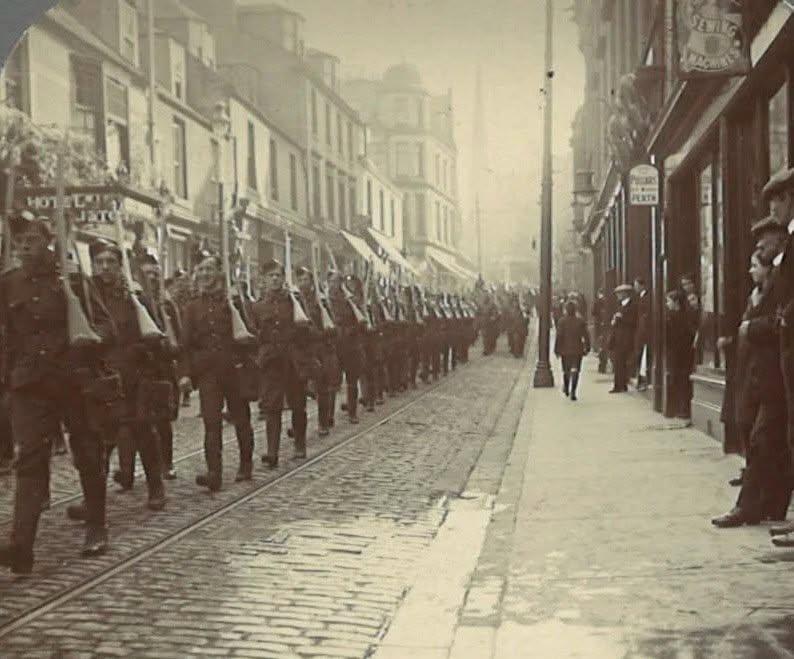

The first photograph in this week’s trip down West Fife’s Memory Lane is of some of the troops who were passing through or stationed in Dunfermline in the early stages of World War 1.
They are marching down Bridge Street and passing the City Hotel.
The photograph brings back family memories for Ian MacKinnon: “My Grandfather was billeted at Pittencrief School serving with 438/262 Royal Field Artillery and married a Dunfermline girl in November 1915”.
Dorothy Galbraith mentions where some of the soldiers visited: “They gathered up Berry Law to practice and muster with their horses.
"I lived next to Coal Road in the 1960s and knew it was a special area”.
George Falconer said: "'It will all be over before Christmas’ they were told.
"How wrong the politicians were. At the time it was called ‘The Great War” because it was so bloody with loss of life that had never been seen before and it was difficult to envisage another war.
"It was also called ‘The war to end all wars’.
"Well here we are in 2026 and wars still go on.”

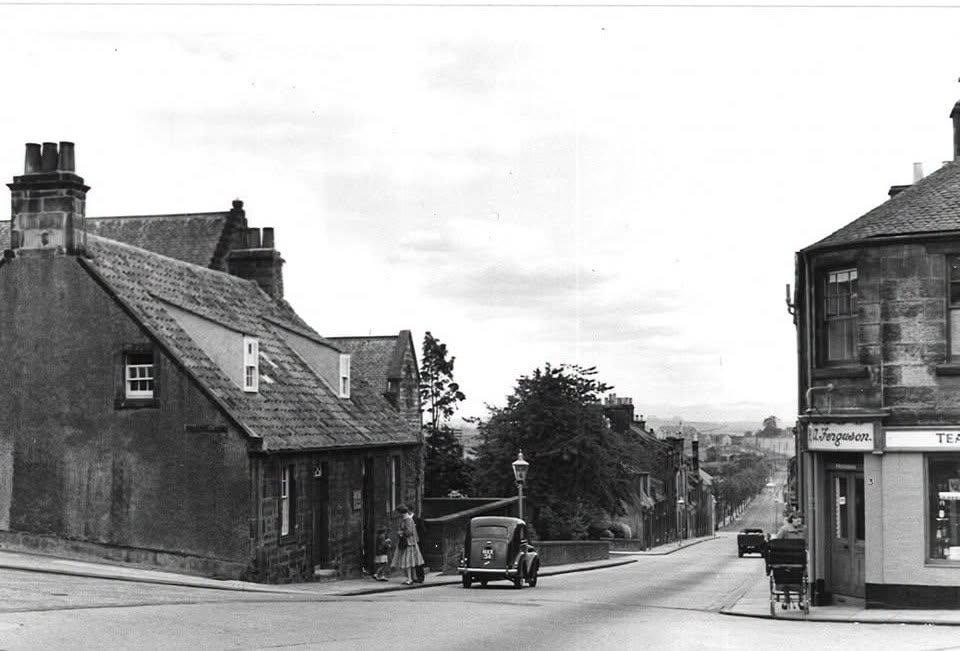
The next photograph is looking down Moodie Street with the cottage where Andrew Carnegie was born in 1835 on the left and Fergusons Licensed Grocers shop on the right which has since been demolished.
A Memorial Hall was added in 1928, funded by Andrew Carnegie’s widow Louise Whitfield and designed by Dunfermline architect James Shearer.

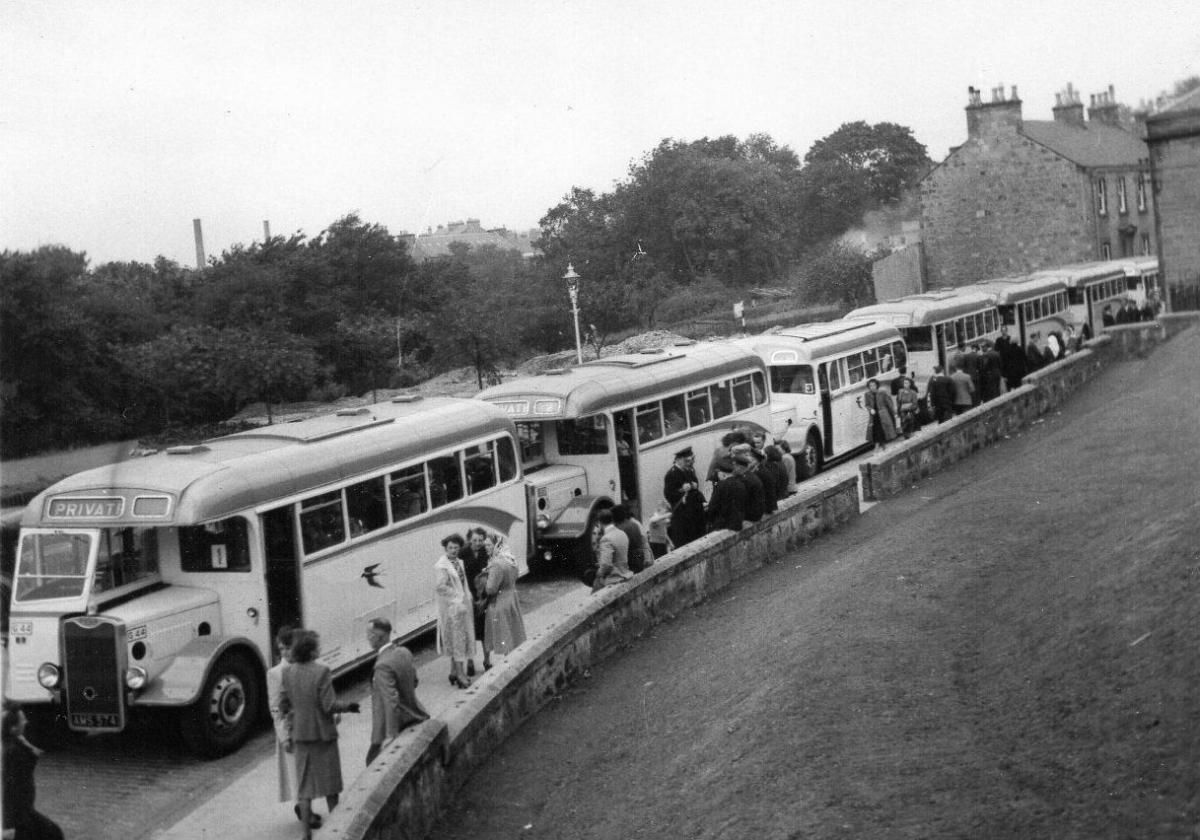
Our next photograph is of an outing by the Canmore Works staff with the buses lined up outside their factory on what was upper Bruce Street, formerly called Damside Street.
The area is now occupied by Tesco and its car park.
Gillian Wallace remembers it: “The buses are lined up outside what was Winterthurs silk factory where I worked for many years.
"It was a great place to work and we were like a big family there, I have a lot of lovely memories.”
Destinations for the outings included the 'Heads of Ayr', Pitlochry, Loch Lomond, and the Trossachs. Winterthur Silk Works opened in 1932 and later gained national attention when the company was chosen to provide silk for the then Princess Elizabeth’s wedding dress, designed by Norman Hartnell.
‘Thomson World of Furniture’ also later occupied the building.

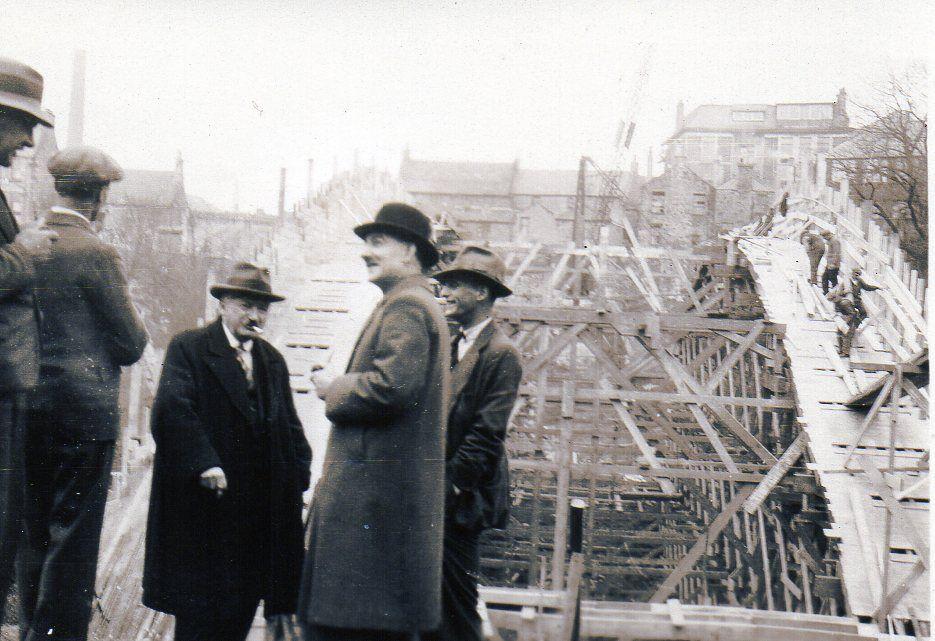
Our final photograph was provided by Dunfermline Press reader Henry Bosshardt whose Swiss father Walter Bosshardt was Managing Director of Winterthur Silk Mills in Dunfermline.
It shows the Glen Bridge itself being built in the early 1930s as viewed from Chalmers Street looking east, with senior staff from Winterthur visiting from Switzerland and viewing progress of a construction that would improve transport connections into and out of their newly built factory.
Katherine Stewart has a family connection with the Glen Bridge: “My grandfather, who was a stone mason, helped build the bridge, as well as the bridge at Guardbridge near St. Andrews and was one of the stone masons at Mount Melville estate near St. Andrews”.
More photographs like these can be seen in Dunfermline Carnegie Library and Galleries.


Share